
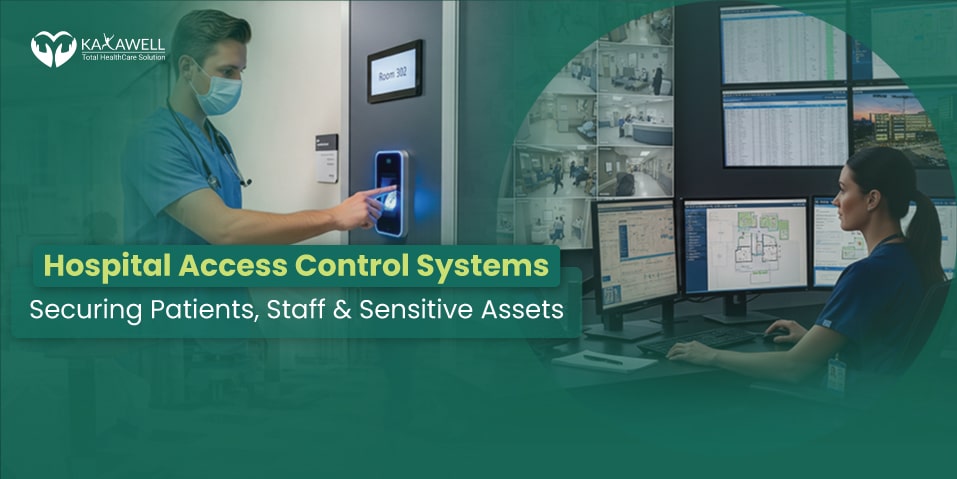
Hospital Access Control Systems: Securing Patients, Staff, and Sensitive Assets
Security in healthcare is no longer just about locking doors — it’s about protecting lives, sensitive data, and critical medical assets. Modern hospital access control systems help regulate who can enter specific areas. They ensure that only authorized staff can access high-risk zones such as ICUs, pharmacies, and server rooms. As concerns over workplace safety, theft, and HIPAA compliance grow, hospitals need advanced, integrated access control solutions. The right system improves safety, streamlines operations, supports public access, and fosters a culture of trust in healthcare environment..
Why Hospitals Need Strong Access Control
Healthcare facilities and hospitals face a critical challenge. Staff often work irregular shifts. Security teams must monitor multiple entry points at once. Medical providers are responsible for patient safety, as well as protecting sensitive equipment, high-value medications, and confidential data. We know that the stakes are high – surveys show that over 70% of healthcare workers are concerned about workplace violence. Hospitals can lose as much as 10% to 20% of some of their high-value assets every year due to theft or improper discharge, somewhere in high-$ millions.
Considering these challenges, we should view an access control system not just as a security tool, but also as a way to ensure workplace safety and build essential trust. A hospital’s access control approach should be methodical. It must consider the hospital’s size, type, operations, and security priorities. At the same time, it should ensure access for patients, visitors, and staff with as few barriers as possible.
Understanding Access Control Considerations in a Healthcare Facility
Access control in hospitals combines technologies, policies, and operational procedures to ensure that only authorized individuals can access specific areas and resources. For example, who can walk into an ICU ward, who can access a pharmacy, or who can log into servers containing electronic health records.
The access control system your healthcare organization establishes must fulfill three key objectives simultaneously: controlling physical access, protecting sensitive data and systems, and providing regulated access for visitors. It must also be dependable, flexible, and fast—because in healthcare environments, any delay or error in access can have an immediate and serious impact on patient care.
How do Hospitals use Access Control
Hospitals often use a hybrid of physical and electronic access control systems to create protective layers. At the outermost perimeter of hospitals, there are some measures to control access such gates, security fencing, and monitored parking lots. These measures create a funnel for both foot and vehicle traffic to follow at monitored entrances and exits, which the security team is able to track.
When you enter the hospital, electronic access control systems (EACS) further provides a secondary level of effectiveness using any method of electronic locks that can be integrated with card readers, biometric scanners, or mobile based credentials. Therefore, staff have authorized access to enter controlled access area.
For healthcare providers interested in the Best Access Control System, then consider realizing the full potential of access control systems like Coram that take their security platform to the next level offering an AI-based approach that works with existing infrastructure that can be seamlessly integrated while providing intelligent monitoring and access management scouting for solutions that will eliminate costs with unnecessary system replacement.
On-premise hospital access control systems give healthcare facilities greater control over their security environments. Administrators manage permissions locally. These systems integrate seamlessly with other hospital safety features and can be customized to meet each facility’s unique needs. Although maintaining on-premise systems can require significant resources, cloud-based solutions offer greater flexibility. Security teams can remotely update settings, instantly revoke access, make authorized changes with full audit trails, and monitor access activity in real time from anywhere.
Role of Policies in Hospital Access Control System
While technology is very compelling, it will not create the best results without policies that can be enforced. Hospitals are adopting an increasingly zero trust policy; All users must be verified before accessing secure areas, and permissions should be assigned based on their roles. For example, if an employee’s role requires access to the warehouse, their credentials should grant access only to that area—not to the pharmacy or IT server room. This role-based approach minimizes risk by ensuring individuals can only enter areas necessary for their job.
Policies also define how and when credentials are issued, monitored, and revoked. For example, time-based permissions can grant contractors or specialists access only for the necessary duration, automatically terminating access once the specified work is complete. All access events are logged, creating an audit trail with recorded data for compliance reviews, investigations, and quality checks.
Managing Visitors and Not Losing Safety
Hospitals manage large volumes of visitors every day, making effective security and safety management essential. Modern visitor management systems simplify the process by enabling visitors to pre-register online, check in at a kiosk, and receive temporary credentials—either as a printed pass or a mobile QR code. These systems can restrict access to designated areas, such as patient rooms, and enforce time limits to control the duration of each visit. This ensures all visitors are tracked, access points are used only with proper authorization, and everyone in the facility can be quickly accounted for in an emergency evacuation.
Why Access Control Systems Are a Must-have at Hospitals
One of the most powerful active defences for implementing a comprehensive access control program is the need to safeguard all valuable possessions and bounded assets. Hospitals store prescription drugs, controlled substances, stopwatch dollars-and-cents diagnostic apparatus, and patients’ personal effects. Robust access control may mean that much of the above is, at least, substantially less susceptible to theft, tampering or misuse.
At the same time, hospitals must contend with the dichotomy of public versus private. This is a key aspect of effective security and safety management. Modern visitor management systems streamline the process by allowing visitors to pre-register online, check in at a kiosk, and receive temporary credentials—either as a printed pass or a mobile QR code. These credentials can limit access to specific areas, such as a patient’s room, and enforce time restrictions to ensure visitors stay only for a defined period.
Access control is essential for regulatory compliance. Hospitals must keep accurate, verifiable logs of all entry events. These logs include details like premises accessed, actions taken, and authorized entry. With this information, hospitals can provide clear proof of compliance with healthcare safety and privacy regulations during inspections and audits.
Best Practices for Hospital Access Control System
A successful access control solution for hospitals starts with a clear understanding of the hospital’s specific needs. Many hospitals now use cloud-based management platforms. These platforms offer flexibility, real-time monitoring, and can integrate mobile credentials with existing systems. Role-based access control is especially effective, as it assigns permissions based on job responsibilities and reduces overall security risk.
Hospitals use different types of credentials based on the required level of security. For low-risk areas, a simple keypad lock may be enough. High-risk areas—like medication storage or server rooms—require stronger measures, such as biometrics or multi-factor authentication. Time-based credentials are also useful for managing visitors and contractors, as they restrict both access and duration within specific areas.
Integration is another best practice. Linking access control with CCTV, alarms, and environmental sensors allows for a fast, coordinated response during a crisis. This turns the system into more than just a lock—it becomes a key tool for managing emergencies. For example, if a sensor detects smoke or aggressive behavior, the system can respond immediately. It may lock doors, alert security or law enforcement, and stream live video to assist their response.
Conclusion: Creating a Safer Hospital
Hospital access control systems are more than just locking doors – they aim to protect lives, assets, and sensitive information. An effective access control solution protects lives and assets while supporting a safe, flexible healthcare environment.
Hospitals can meet operational and regulatory needs with a balanced approach to access control. This includes using zero-trust policies and assigning access based on roles. It also involves integrating security into existing technologies. At the same time, patient data must be protected while still allowing public access in critical areas. The benefit is a better-performing facility where patients feel safe, staff can work efficiently, and administrators can demonstrate compliance confidently.
