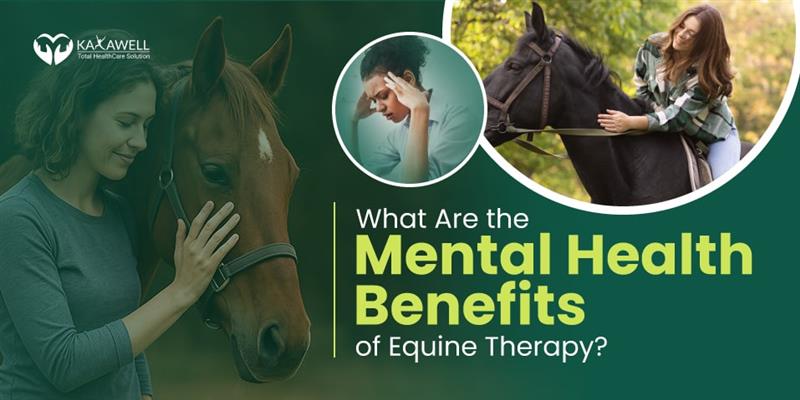
What Are the Mental Health Benefits of Equine Therapy?
Equine therapy (also called equine-assisted therapy or horse-assisted therapy) has steadily become more common throughout the United States, as individuals seek alternative or complementary treatments to standard mental health approaches due to its numerous mental health benefits.
Equine therapy is the intentional interaction of clients with horses in a structured manner usually assisted by mental health professionals or qualified equine specialists. Though equine therapy may seem far-fetched in its concept, evidence for the emotional and psychological benefits of horse-based therapy is mounting, and both clinical and personal accounts of its success are becoming evidence-based.
One of the most compelling mental health benefits of equine therapy is how much more rapid it can build trust, emotional regulation, and self-awareness—everything you need to heal from your mental illness long term. At treatment centers like Ingrained Recovery in Georgia, equine therapy is not only an additional service, it’s a core component of our trauma-informed, whole-person treatment philosophy.
As more people learn more about holistic healing practices there is a growing problem at play: is there insurance coverage for horse therapies and are they available to people who need mental health treatment?
In this article Kaywall answers these questions and also helps you to understand both the emotional aspect of equine therapy as well as the logistical aspects both of which you should know about as anyone considering these types of treatments.
How Equine Therapy Supports Mental Health
Horses are highly perceptive animals that are able to sense nonverbal cues and emotional sensitivity. This sensitiveness allows them to be an excellent behavioral partner for therapy. Clients in equine therapy are not just riding horses, but are engaged in various activities that teach mindfulness (how to take care of your horse) as well as understanding emotions (their own).
As with talk therapy, equine therapy is an experiential approach. The horse is more of a mirror, and can often respond to a person’s own inner state in real time. This occurs because of immediate feedback loops that help individuals identify and work with their patterns of behavior, thought, and emotion.
Because you’re a horse. You’re present. You’re free to be vulnerable. A horse offers a calming and nonjudgmental space, and it can feel good to have a secure place where someone really isn’t afraid to speak or behave empathetically or selflessly. Each therapy is based on what’s going on within you, and is designed to work for those people who have empathetic tendencies.
Emotional Regulation and Trust-Building
One of the first effects many participants report is better emotional regulation. Horses are very hesitant to respond erratically or to be told what exactly to do, so consumers must learn how to remain calm and assertive with their presence. This regulation, in turn, is not only internal, but relational as consumers learn how to read, interpret and receptively pay attention to the horse’s cues.
Additionally, equine therapy helps to rebuild trust in both self and others. Trust is often broken when people have complex trauma or attachment injuries. For people who work with horses, the ability to form an immediate bond with a large animal such as a horse can be life changing. Rebuilding trust often requires time and effort. Because working with horses facilitates a relationship with each other in an authentic, immediate way that is free from any judgment or prejudice from a person’s self.
Self-Awareness and Personal Growth
Clients often gain a deeper insight into their own behavioral patterns through interaction with the equine. For example, a person who regularly feels depressed may observe that their horse often gets uncomfortable or uninterested when they (mindfully) “check out. ” This kind of insight often comes out faster and more intensely in equine therapy sessions than in traditional therapy sessions because the equine is an intuitive partner.
That level of self-awareness, then, provides the seeds for broader changes in one’s life. As someone develops confidence, they also begin to explore aspects of leadership, boundary setting, and intimate relationships—key areas that contribute to the overall mental health benefits essential for long-term well-being.
Who Benefits Most from Equine Therapy?
Equine based therapy is particularly effective in individuals with communication difficulties or who would otherwise struggle with traditional office-based therapy. Adolescents, veterans, survivors of abuse, and adults recovering from substance use disorders have many positive outcomes with equine based therapy.
Equine therapy at Ingrained Recovery in Georgia is provided within the broad framework of trauma informed counseling, group therapy, and experiential therapy. Through a holistic approach, clients will be able to understand their equine experiences as part of a larger system of psychological healing.
The therapy can also help people suffering from chronic stress, burnout or emotional exhaustion because of the rhythm and simplicity of interaction with horses away from screens, noise and other external pressures to make very significant psychological changes.
The Role of Environment in Healing
Your specific environment matters in therapy and very few conditions are as therapeutic as a quiet pasture or stable outside of the clinic walls. The natural environment in an equine therapy clinic can also add to the overall healing process. Also the physical aspect of caring for and working with horses also adds to the somatic aspect as a whole that helps bring the body-mind connection to bear on the process of trauma resolution.
Being outside, moving with intention, and interacting with animals who live full-time in the present all combine to offer you an intense sense of grounding and embodiment. Many clients report that they feel “more like themselves” during and after sessions, and that’s why equine therapy is so much more than just an emotionally-charged, but also spiritually-energizing process.
Insurance Coverage for Horse Therapies
Even with the therapeutic benefits, many people looking into equine therapy wonder what is really covered under insurance for horse therapies. And how can I afford this type of care?
The answer depends largely upon the type of treatment and the structure of the equine program. Stand alone equine therapy programs, especially those not supervised by licensed clinicians, are generally not covered by insurance; however, when equine therapy is part of a clinically supervised program (typically a residential or outpatient treatment plan with credentialed mental health professionals) it is more likely that insurance will reimburse it.
Ingrained Recovery in Georgia has incorporated equine therapy into their clinical program as part of an overall licensed mental health treatment plan that usually will be covered under similar benefits for behavioral health or substance use disorder services. Through this model insurance companies are much more likely to cover equine therapy if we can provide a diagnosis and medical necessity.
There are some things you can do (and should still do) by talking with your insurance provider about what is covered under your mental health coverage. Ask whether experiential therapies (experiential therapy includes equine-assisted therapy) are reimbursed when provided under the direct supervision of a licensed therapist and as part of a full treatment plan.
Equine Therapy at Ingrained Recovery in Georgia
Equitation therapy is available for individuals at Ingrained Recovery in Georgia as part of their complete and evidence-based treatment approach centered around trauma recovery, emotional resilience, and personal empowerment. Equine sessions are held by trained specialists with input from licensed clinicians to ensure effectiveness and validity of the treatment.
These services are available through equine therapy inline with Ingrained Recovery‘s concept of healing as a whole person process, and that it takes more than talking to help people heal. The connection to horses allows clients to confront the patterns that mold their inner world, then, using relationship, presence, and accountability, support them in changing those patterns.
As part of Ingrained Recovery’s equine therapy program, our clients often experience breakthroughs that have been difficult to achieve in more traditional settings. These moments of recognition, feeling authentically seen, feeling calm in one’s body, or taking an emotional risk but recognizing that it’s safe to do so are all critical components to lasting recovery.
Common Questions About Equine Therapy
Many people new to this modality have important and valid questions. Is equine therapy safe for people with no horse experience? What if someone is afraid of animals? What happens during a session?
Equine therapy is intended to be accessible for all clients of any experience level, with safety and comfort being the number one priority. All sessions are supervised in detail as regards client comfort and readiness. Fear is not uncommon throughout this journey, and overcoming that fear can be a key point in a person’s therapeutic journey. All activities are tailored to the individual’s emotional and physical needs.
Also people ask whether equine therapy replaces traditional therapy, and indeed it’s just the opposite: most programs incorporate equine sessions with other forms of counseling and support, to ensure that what you learn from the horse arena can translate into long-term behavioral change.
A Unique Path Towards Healing
Equine therapy offers something terribly rare in the world of mental health: it’s an experience that is nonverbal, embodied, and a source of real connection, reflection, and change. It’s not a quick fix and not an all-encompassing solution but for many people, it opens doors that were once closed.
It doesn’t matter if you’re looking for help with your own mental health or that of another person, learning the therapeutic and practical implications of equine therapy can help inform your search. And when considering an approach that blends these amazing experiences into a clinically-based setting, equine therapy offered at Ingrained Recovery in Georgia is both accessible and incredibly effective.