
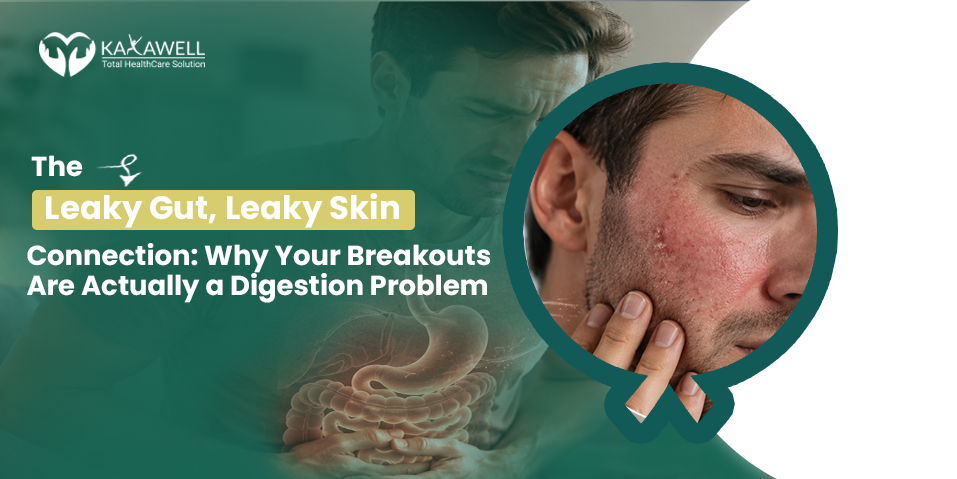
The Leaky Gut, Leaky Skin Connection: Why Your Breakouts Are Actually a Digestion Problem
If you’ve spent years battling acne, eczema, rosacea, or chronic dull skin cycling through topical treatments, prescription creams, and expensive serums and still can’t seem to get clear, lasting results, there’s a good chance you’ve been treating the wrong organ. Your skin issues may have very little to do with your pores and almost everything to do with your Leaky gut.
The relationship between digestive health and skin health is one of the most fascinating and clinically relevant frontiers in integrative medicine today. Researchers now have a term for it: the gut-skin axis. And at the center of this connection is a phenomenon gaining serious scientific traction intestinal permeability, or what many practitioners call “leaky gut.”
What Is Leaky Gut?
Your intestinal lining is a remarkably sophisticated barrier. It’s designed to allow nutrients, water, and beneficial compounds to pass into the bloodstream while keeping out harmful substances like undigested food particles, toxins, and pathogens. This barrier is just one cell thick but it’s reinforced by tight junction proteins that act like molecular gatekeepers, controlling exactly what gets through.
Leaky gut occurs when these tight junctions become compromised. Factors like chronic stress, a diet high in processed foods and refined sugars, antibiotic use, alcohol, environmental toxins, and dysbiosis (an imbalance in gut bacteria) can all weaken the intestinal lining. When the barrier breaks down, larger molecules that don’t belong in the bloodstream start slipping through triggering an immune response.
The result is systemic inflammation. And inflammation, as it turns out, is the root driver of virtually every skin condition we struggle with.
The Direct Line from Your Leaky Gut to Your Skin
Here’s where the science gets compelling. When undigested food particles, bacterial fragments like lipopolysaccharides (LPS), and other gut-derived antigens enter the bloodstream through a permeable gut lining, the immune system launches an attack. This creates a state of chronic, low-grade systemic inflammation that doesn’t stay confined to the digestive tract.
The skin, as a peripheral immune organ, becomes a primary site where this internal inflammation expresses itself. Here’s how that plays out across different skin conditions:
Acne: Inflammation drives the overproduction of sebum and creates the environment in which C. acnes bacteria thrive. But more importantly, gut dysbiosis a disrupted microbiome alters hormone metabolism. The gut is responsible for processing and eliminating excess androgens (hormones like testosterone and DHEA that directly stimulate oil glands). When gut bacteria are out of balance, hormones get recirculated rather than excreted, leading to the hormonal surges that trigger breakouts.
Eczema (Atopic Dermatitis): Multiple studies have found that infants and adults with eczema have significantly altered gut microbiome compositions compared to those without. The gut-skin axis in eczema involves immune dysregulation: a leaky gut primes the immune system toward a hyper-reactive, Th2-dominant state that triggers the inflammatory skin response characteristic of eczema flares.
Rosacea: Research has found a striking association between rosacea and small intestinal bacterial overgrowth (SIBO). In one widely cited study, patients with rosacea had rates of SIBO nearly ten times higher than controls and treating the SIBO led to significant improvement or complete clearance of their rosacea symptoms.
Psoriasis: As an autoimmune skin condition, psoriasis has strong gut connections. People with psoriasis show reduced microbial diversity in their gut and higher rates of intestinal permeability. The inflammatory cytokines triggered by leaky gut directly fuel the immune dysregulation that causes the rapid, abnormal skin cell turnover seen in psoriatic plaques.
The Microbiome: Your Skin’s Invisible Ally
Your gut is home to approximately 38 trillion microorganisms bacteria, fungi, viruses, and archaea that collectively form your gut microbiome. This ecosystem is not just a passive bystander in digestion. It actively regulates immune function, produces vitamins and neurotransmitters, metabolizes hormones, and communicates with virtually every organ system in the body, including the skin.
The skin has its own microbiome, and the two communities are in constant dialogue. Gut-derived metabolites including short-chain fatty acids (SCFAs) produced when gut bacteria ferment dietary fiber have anti-inflammatory effects that directly benefit skin barrier function. When the gut microbiome is depleted or disrupted, SCFA production drops, skin barrier integrity weakens, and the conditions for inflammatory skin conditions are set.
Conversely, a diverse, balanced gut microbiome produces compounds that reduce systemic inflammation, support proper hormone clearance, and strengthen both the gut lining and the skin barrier simultaneously.
What’s Feeding the Fire?
Modern life is not kind to the gut-skin axis. Several common lifestyle factors drive intestinal permeability and microbiome disruption:
Dietary Patterns: Diets high in refined carbohydrates, sugar, ultra-processed foods, and industrial seed oils promote dysbiosis and intestinal inflammation. Gluten and dairy, in individuals with sensitivities, can trigger immune responses that directly compromise tight junction integrity. Conversely, a diet rich in diverse plant foods, fermented foods, and omega-3 fatty acids supports microbial diversity and a healthy gut lining.
Chronic Stress: The gut-brain axis is real and powerful. Chronic psychological stress elevates cortisol, which increases intestinal permeability and alters gut motility and microbial composition. Stress doesn’t just make you feel worse it literally makes your gut leakier.
Antibiotic and Medication Overuse: Antibiotics are sometimes necessary, but frequent or prolonged use devastates microbial diversity in ways that can take months or years to recover from. Nonsteroidal anti-inflammatory drugs (NSAIDs), proton pump inhibitors, and oral contraceptives also affect gut lining integrity and microbiome composition.
Environmental Toxins: Pesticide residues, heavy metals, and endocrine-disrupting chemicals found in food, water, and personal care products have been shown to alter gut barrier function and microbial diversity another reason that reducing toxic load is a key part of skin health.
Healing the Gut to Heal the Skin
If your skin issues are rooted in gut dysfunction, the most effective path forward is to address the gut directly not just manage surface symptoms. A root-cause approach to gut-skin health typically involves several interconnected strategies:
Restore the gut lining: Key nutrients for repairing tight junctions and intestinal epithelial cells include L-glutamine, zinc carnosine, collagen peptides, and vitamin D. These compounds directly support the structural integrity of the gut barrier.
Rebalance the microbiome: Introducing a broad-spectrum probiotic alongside prebiotic-rich foods (garlic, onions, leeks, oats, asparagus, bananas) helps rebuild microbial diversity. Fermented foods like kefir, kimchi, sauerkraut, and yogurt provide live beneficial bacteria along with naturally occurring enzymes and organic acids.
Reduce inflammatory triggers: An elimination or anti-inflammatory diet removing common triggers like gluten, dairy, sugar, and alcohol for a defined period can dramatically reduce gut-driven systemic inflammation and its downstream skin effects.
Support detoxification pathways: Since the liver, gut, and skin all play roles in hormone and toxin clearance, supporting liver function with cruciferous vegetables, adequate hydration, and targeted nutrients helps reduce the inflammatory burden reaching the skin.
Address the stress response: Practices like meditation, breathwork, adequate sleep, and nervous system regulation are not optional lifestyle extras they are genuine therapeutic tools for reducing cortisol-driven gut permeability.
For those dealing with skin conditions as part of a broader autoimmune picture, the gut-skin connection is even more critical. The team at Autoimmunity Care takes a precision approach to root-cause healing, offering clinically formulated supplements and protocols designed to address the gut dysfunction, immune dysregulation, and nutritional deficiencies that underlie both autoimmune and inflammatory skin conditions.
Stop Fighting Your Skin Start Listening to Your Gut
Your skin is not broken. It’s communicating. Breakouts, redness, flares, and inflammation are your body’s way of signaling that something deeper is out of balance and that signal is most often originating in the gut.
The good news is that the gut-skin axis works in both directions. When you heal the gut, the skin follows. Not because you’ve suppressed a symptom, but because you’ve addressed the source. Real, lasting skin health isn’t built on better topicals it’s built on a healthier gut, a more balanced immune system, and a body that has the support it needs to regulate itself.
Clear skin starts from within. And within, it starts in the gut.