
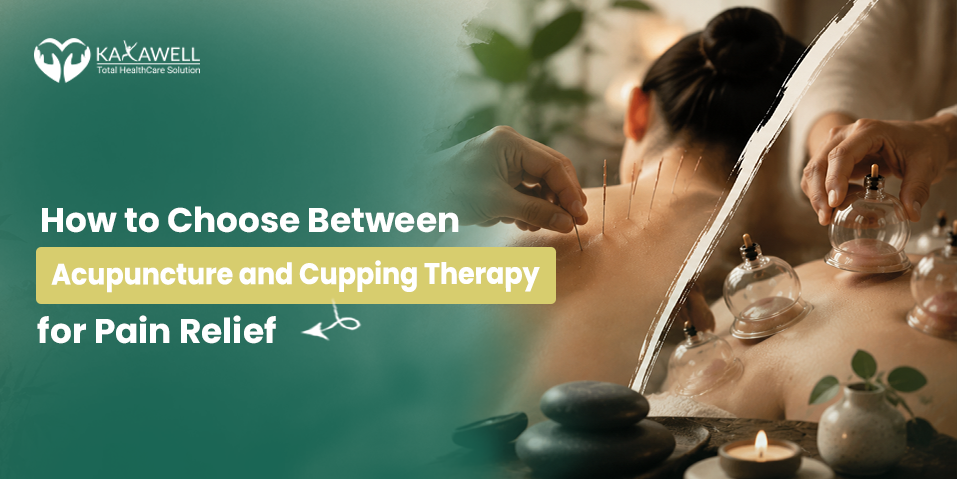
How to Choose Between Acupuncture and Cupping Therapy for Pain Relief
Cupping Therapy has become an increasingly popular option for individuals seeking natural pain relief. Living with pain isn’t easy, whether it’s a stiff neck, chronic lower back pain, or muscle stiffness that’s been building up for years. When painkillers offer only temporary relief without addressing the root cause, people naturally start looking toward alternative therapies. Two of the most discussed options today are acupuncture and cupping therapy. Both originate from Traditional Chinese Medicine (TCM), both focus on balancing the body rather than just masking symptoms, but they work in very different ways.
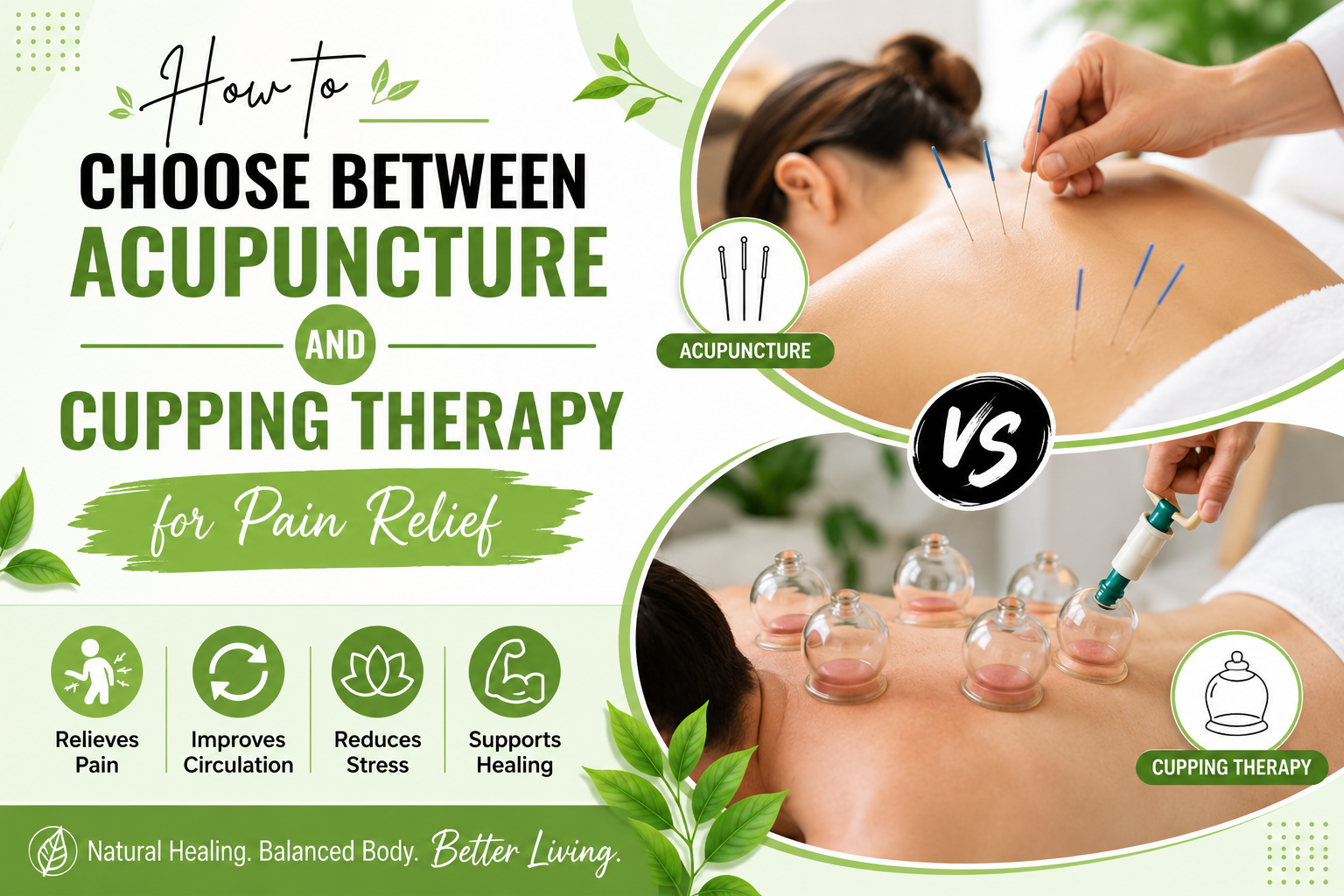
If you’re still unsure which one might suit you better, this article breaks it all down. We’ll look at both therapies in detail, their benefits, the key differences between them, and how to decide which one is more effective for your specific type of pain.
Many people searching for a qualified practitioner in their area often find that acupuncture Mississauga clinics are widely available, and what stands out is that trained therapists usually assess a patient’s condition first before deciding on a treatment plan — a good sign that the therapy isn’t generic, but follows a personalized approach.
What Is Acupuncture and How Does It Work?
Acupuncture is an ancient Eastern healing technique that involves inserting thin, sterile needles into specific points on the body, known as “acupoints.” According to Traditional Chinese Medicine, the body has pathways called “meridians” through which “qi” (life energy) flows. When this flow gets blocked for any reason, pain or discomfort follows.
Modern science looks at this from a slightly different angle. Research suggests that acupuncture targets nerves, while cupping releases muscles — chronic pain and internal conditions tend to respond better to acupuncture. Acupuncture stimulates the nervous system in a way that helps modulate pain signals, and it also encourages the release of the body’s natural painkillers — endorphins.
Studies have also shown that acupuncture’s benefits aren’t limited to physical pain alone. Acupuncture helps balance the sympathetic and parasympathetic nervous systems, which in turn eases stress and anxiety. For people dealing with chronic pain, this is essentially a double benefit, since pain and stress often feed into each other.
What Is Cupping Therapy and How Does It Work?
Cupping therapy involves placing cups — made of glass, silicone, or plastic — on the skin to create suction. This suction pulls the skin and underlying tissue upward, which increases blood flow and helps release muscle tension. Cupping is believed to induce comfort and relaxation at a systemic level, and the resulting increase in endogenous opioid production helps improve pain control.
There are a few different types of cupping:
- Dry cupping — only suction is created, with no incisions involved.
- Wet cupping, often referred to as hijama and cupping therapy, involves a light, controlled scratch on the skin followed by suction. Hijama, as it’s called in Arabic culture, refers to cupping that’s been practiced for pain reduction, decreasing inflammation, immunomodulation, and blood-related adjustments. It also has deep roots in traditional Islamic and Middle Eastern medicine practices.
- Moving/dynamic cupping — the cups are moved across the skin, similar to a massage technique.
Cupping’s primary goal is to improve circulation, reduce inflammation, and release muscle tightness. Dry cupping tends to be preferred in Western settings because it carries a lower risk of biohazard exposure, though research suggests wet cupping may offer broader benefits. This is exactly why cupping is so popular for muscular pain, stiffness, and surface-level tension.
What’s the Real Difference Between the Two?
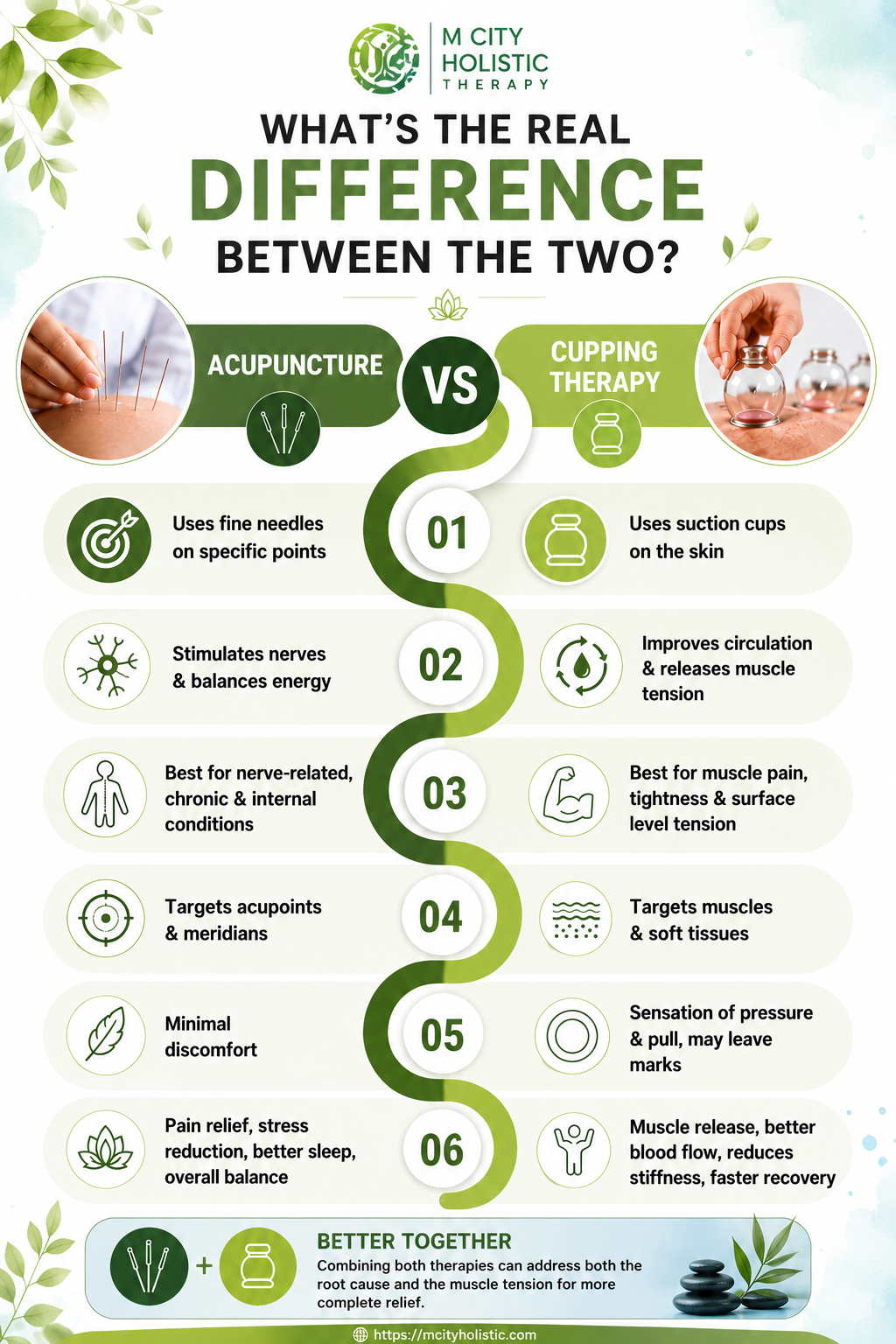
When you’re choosing between the two for pain relief, the most important thing to understand is where each therapy tends to perform best:
Acupuncture tends to work better when:
- The pain is nerve-related (such as sciatica or neuropathy)
- The condition is chronic or internal in nature
- Stress, anxiety, or sleep issues are tied to the pain
- You’re looking for a precise, targeted form of treatment
Cupping tends to work better when:
- The pain is muscular — tight shoulders, a stiff back, or muscle knots
- It’s surface-level tension that responds well to massage-like pressure
- You want to improve circulation
- You’re looking for a therapy that feels like a physical “release”
Interestingly, research generally considers both therapies to be equally safe and effective for pain-related conditions, even though their mechanisms differ quite a bit. Acupuncture typically uses tenderness points and the meridians that pass through the area of pain, while cupping — particularly wet cupping — uses specific acupoints for localized pain, with moving cupping targeting meridians for more widespread discomfort.
In practical terms, this means that if your pain is a specific, localized muscle knot, cupping therapy Mississauga clinics often recommend this exact approach, since it offers a direct, hands-on release that targets deep tissue tension fairly quickly.
Can You Combine Both Therapies?
This is a fair and fairly common question, and the answer is yes. Many practitioners recommend pairing cupping therapy with acupuncture so patients can get the benefits of both treatments at once. Acupuncture focuses on the nerves and internal balance, while cupping works on muscles and surface tension — so combining the two often delivers more comprehensive relief for a lot of people.
This combined approach tends to be especially useful for people whose pain is layered — meaning there’s both muscle tightness and some degree of nerve-related discomfort involved. You won’t necessarily target both in a single session, but if the practitioner is trained in both modalities, they can build a treatment plan around your specific needs that delivers a more balanced result over time.
What Should You Look for in a Practitioner?
Whichever therapy you end up choosing, finding the right practitioner matters more than almost anything else. Here are a few basic things worth checking:
- Proper certification and training — your practitioner should be licensed and properly trained, especially for wet cupping/hijama, where hygiene and sterilization are critical.
- Hygiene standards — sterile equipment, single-use needles, and clean cups are non-negotiable.
- A personalized assessment — a good practitioner takes the time to understand your pain history and lifestyle before recommending a treatment, rather than offering a one-size-fits-all approach.
- Honest communication — a trustworthy practitioner sets realistic expectations instead of overpromising results.
When it comes to quality and safety, practices like M City Holistic Therapy are known for having trained practitioners conduct sessions based on the patient’s actual condition, recommending acupuncture or cupping accordingly rather than defaulting to the same treatment for everyone.
How to Make Your Final Decision
If you’re still on the fence, here’s a simple way to approach it:
- Start by identifying the nature of your pain — is it muscular, or is it nerve-related? Is it surface-level, or deep and chronic?
- Get clear on your goals — are you only looking for pain relief, or also general relaxation and stress reduction?
- Talk to a practitioner — a qualified professional can assess your condition and guide you toward the right therapy, or even a combination of both, based on what you actually need.
- Listen to your body — sometimes the best decision is simply the one your body feels most comfortable with. If needles make you hesitant, cupping can be a gentler starting point, and the reverse is true as well.
There’s no single “better” answer between the two — it really comes down to your specific type of pain, your comfort level, and what you’re hoping to achieve.
Frequently Asked Questions (FAQs)
1. Which one is more painful — acupuncture or cupping therapy?
Generally, both involve minimal discomfort. Acupuncture needles are extremely thin, and most people feel little to nothing beyond a slight pinch. Cupping creates a mild pressure sensation from the suction, and it often leaves circular marks on the skin that fade within a few days.
2. Can I get acupuncture and cupping in the same session?
Yes, many practitioners combine both to provide more complete pain relief — acupuncture for nerve and internal balance, and cupping for muscle tension. That said, it depends on the practitioner’s training and your specific condition.
3. How long do the circular marks from cupping usually last?
These marks typically fade within 3 to 10 days, depending on skin type and how intense the suction was. They resemble light bruising but aren’t painful and usually heal on their own without any treatment.
4. Which therapy works better for chronic back pain?
Research suggests both therapies show similar effectiveness for chronic back pain. If the pain is mostly muscular tightness, cupping may offer faster relief. If there’s nerve involvement, acupuncture tends to be the better fit.
5. Are these therapies safe for everyone?
For most healthy adults, both therapies are safe when performed by a qualified, licensed practitioner. However, pregnant women, people with blood disorders, or those with certain skin conditions should consult their doctor first. It’s always a good idea to share your full medical history with your practitioner before starting any session.