
Tobacco, Betel Nut and Alcohol: How Everyday Habits Raise Oral Cancer Risk
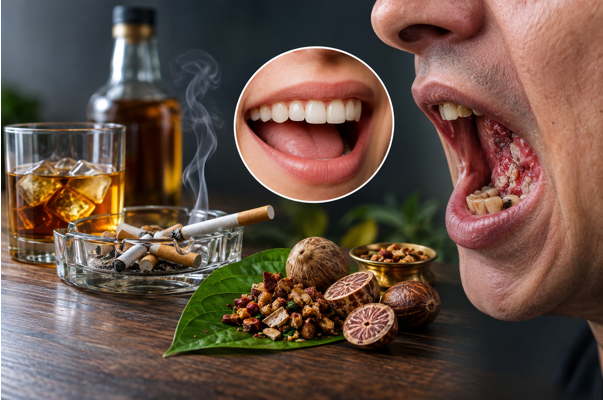
Oral cancer can develop in different parts of the mouth, including the lips, tongue, gums, inner cheeks, floor of the mouth and palate. Several everyday habits can increase the risk of developing oral cancer, particularly long-term tobacco use, areca or betel nut chewing and alcohol consumption.
The risk can become more concerning when these exposures are frequent, prolonged or combined. Knowing the risk factors and recognising early mouth cancer symptoms can encourage people to seek medical evaluation sooner.
How Do Tobacco, Betel Nut and Alcohol Increase Oral Cancer Risk?
Tobacco, areca nut and alcohol can expose the tissues of the mouth to substances that contribute to cellular damage and increase the likelihood of cancer developing over time. Tobacco is associated with oral cancer whether it is smoked or used in smokeless forms. Betel quid and areca nut are also established risk factors for oral cancer, including when tobacco is not added. Alcohol independently increases the risk of cancers of the mouth and throat.
Using tobacco and alcohol together is particularly concerning because the combined effect can be greater than the effect of either exposure alone. Regular, long-term use increases cumulative exposure and therefore warrants greater attention.
How Tobacco Affects the Mouth
Tobacco exposes the mouth to numerous chemicals that can damage cells and contribute to changes in oral tissues. This applies to cigarettes, bidis, cigars and smokeless tobacco products such as chewing tobacco.
Smokeless tobacco can keep carcinogenic substances in direct contact with the lining of the mouth for prolonged periods. Repeated exposure over many years increases the risk of oral and other head and neck cancers.
Tobacco use may also be associated with changes in the mouth, including persistent irritation, patches or sores. Any unusual change that does not resolve should be examined rather than assumed to be a normal effect of tobacco use.
Why Betel Nut and Areca Nut Are a Concern
Betel quid may contain betel leaf, areca nut, lime and, in some preparations, tobacco. The areca nut itself is considered carcinogenic, and chewing betel quid – with or without tobacco – is associated with an increased risk of oral cancer.
Regular users may notice changes such as:
- Persistent irritation or soreness inside the mouth
- White or red patches
- Changes in the texture or flexibility of oral tissues
- Difficulty opening the mouth
- Persistent burning or discomfort
Areca nut use is particularly relevant in South Asia, including India. The risk increases with the frequency and duration of chewing.
Does Alcohol Increase the Risk of Oral Cancer?
Yes. Alcohol is an established risk factor for cancers of the oral cavity and other parts of the head and neck. The risk generally increases as alcohol consumption increases.
Alcohol can also be particularly concerning when combined with tobacco. Research shows that people who use both tobacco and alcohol have substantially greater risks of oral and head-and-neck cancers than people who use either one alone.
This does not mean that every person who drinks alcohol or uses tobacco will develop cancer. Risk factors increase the likelihood of disease but do not determine an individual outcome.
Mouth Cancer Symptoms You Should Watch For
Recognising mouth cancer symptoms early can help people seek appropriate medical assessment. Possible warning signs include:
- A mouth ulcer that does not heal: A sore or ulcer that persists instead of improving should be examined.
- White or red patches: Persistent white or red areas on the tongue, gums, cheeks or other parts of the mouth may require evaluation.
- Persistent mouth pain: Ongoing pain or discomfort without an obvious cause should not be ignored.
- A lump or thickening: A new lump, swelling or thickened area inside the mouth or on the lip warrants examination.
- Difficulty chewing or swallowing: Persistent difficulty eating, chewing or swallowing may need medical assessment.
- Unexplained bleeding: Bleeding from the mouth without an obvious cause should be evaluated.
- Persistent sore throat: A sore throat or throat discomfort that does not settle may require assessment.
- Difficulty moving the tongue or jaw: Reduced movement or increasing difficulty opening the mouth can be a warning sign.
These symptoms can also occur with non-cancerous conditions. Their presence does not mean that a person has cancer, but persistent or unexplained changes should be checked by an appropriate healthcare professional.
When Should You Get a Mouth Lesion Checked?
Not every mouth ulcer or sore is cancer. Minor ulcers can occur because of accidental biting, irritation, infections or other common causes and often resolve on their own.
However, a lesion that persists, repeatedly returns, grows, bleeds, becomes painful or is accompanied by another unusual oral change should be examined.
Consider getting an oral lesion checked if:
- It does not heal or improve
- It keeps returning in the same area
- There is a persistent white or red patch
- You notice a lump or thickened area
- You have difficulty chewing, swallowing or opening your mouth
- You regularly use tobacco, betel nut or alcohol
People with established oral cancer risk factors may particularly benefit from timely clinical examination.
Mouth Cancer Diagnosis: What Tests May Be Recommended?
Diagnosis usually begins with a detailed examination of the mouth, tongue, gums, cheeks and surrounding areas. If a suspicious lesion is identified, the doctor may recommend a biopsy, in which a small tissue sample is examined by a pathologist.
Depending on the findings, additional imaging or other tests may be recommended to understand the extent of disease and assist with treatment planning. The exact tests depend on the location and characteristics of the suspected lesion.
Mouth Cancer Treatment in Mumbai: What Are the Options?
If oral cancer is diagnosed, treatment is planned according to factors such as the location and stage of the cancer, overall health and specific tumour characteristics. A multidisciplinary cancer team may be involved in treatment planning.
Depending on the individual case, treatment may include:
- Surgery to remove the cancer and, when necessary, affected lymph nodes
- Radiation therapy to treat the primary tumour or surrounding areas
- Chemotherapy or other systemic treatments in selected situations
- Combined treatment approaches for certain stages or disease characteristics
- Rehabilitation and supportive care to help with speech, swallowing, nutrition and recovery
If you are experiencing persistent oral changes or have been diagnosed with oral cancer, consultation at a specialised centre offering mouth cancer treatment in Mumbai can help you understand the available diagnostic and treatment pathways.
If you notice a persistent mouth lesion or have concerns about your oral health, schedule a consultation with a qualified cancer specialist for appropriate evaluation.
Reducing Your Oral Cancer Risk
Several practical steps can help reduce exposure to established oral cancer risk factors:
- Stop tobacco use in all forms, including smoking and smokeless tobacco.
- Avoid betel nut/areca nut and betel quid products, with or without tobacco.
- Reduce or avoid alcohol consumption.
- Do not ignore persistent oral changes such as ulcers, white or red patches, lumps or unexplained bleeding.
- Seek medical or dental evaluation when an unusual lesion does not resolve.
WHO and IARC identify tobacco, alcohol and areca nut use among the major preventable risk factors for oral cancer, and recommend reducing or stopping these exposures as important prevention measures.
Conclusion
Tobacco, betel nut and alcohol are not harmless everyday habits when used regularly over time. Their association with oral cancer is well established, and the risk can be particularly concerning when tobacco and alcohol are used together.
Knowing the mouth cancer symptoms to watch for can help you recognise changes that need medical attention. A persistent ulcer, unusual patch, lump, unexplained bleeding or difficulty moving the tongue or jaw should not automatically be assumed to be cancer but it should be properly evaluated.
If you are concerned about an oral lesion or need information about mouth cancer treatment in Mumbai, speak with a qualified specialist rather than relying on self-diagnosis.
