
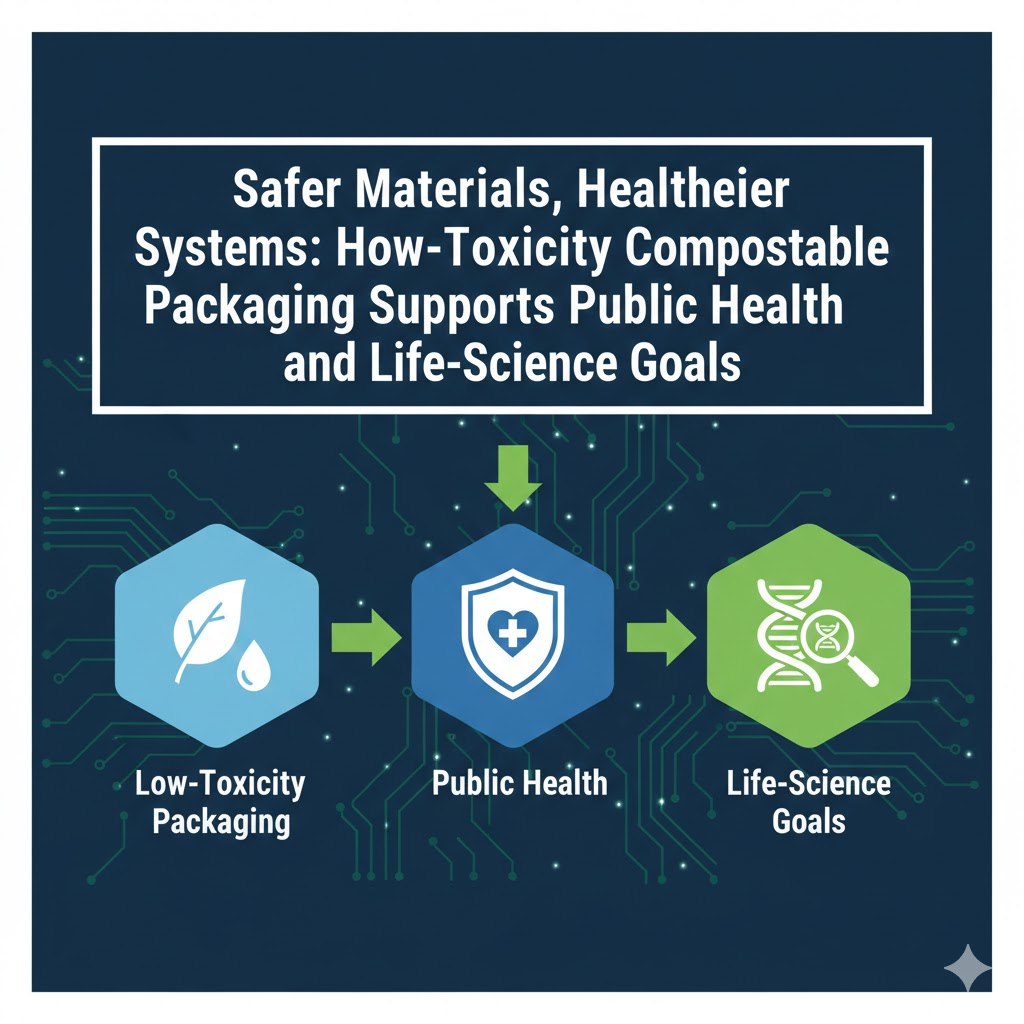
Healthcare and life-science organizations are under mounting pressure to reduce waste, improve chemical safety, and strengthen infection-prevention standards—without increasing operational risk. Yet one area still sits in a grey zone between “facilities,” “procurement,” and “clinical priorities”: single-use foodservice packaging (cups, lids, clamshells, bowls, cutlery, and liners).
This category is often treated as a minor purchasing line item, but from a health systems lens it has outsized influence on chemical exposure pathways, waste streams, and workplace hygiene. Packaging materials can contain additives, coatings, and processing aids that raise safety questions. At the same time, hospitals and health-adjacent workplaces generate high volumes of disposables due to infection control protocols, shift-based dining, and on-site catering.
The next phase of sustainable healthcare is not “less plastic” as a slogan. It is material risk governance: selecting single-use items that balance food-contact safety, low-toxicity chemistry, and end-of-life practicality. A growing set of suppliers now position compostable packaging as a compliance-and-health tool rather than a lifestyle product. One example is Bioleader Environmental Impact Leadership, which frames compostable foodservice packaging within an environmental impact and governance narrative—useful for procurement teams that need traceability, documentation discipline, and operational fit rather than marketing claims.
This article offers a life-science perspective: what the evidence suggests about health-relevant materials risks, where compostables can reduce system burden, how to avoid false solutions, and how to implement a safer materials strategy with measurable outcomes.
The Health Stakes: Packaging Is a Chemical and Systems Issue, Not Just a Waste Issu
In healthcare settings, packaging matters for three reasons that are directly connected to health outcomes and institutional risk.
1) Food-contact chemistry and exposure pathways
Food packaging can contain polymers, plasticizers, colorants, stabilizers, and barrier coatings. While “food contact” regulations exist, many health organizations apply a precautionary approach—especially when dealing with vulnerable populations (patients, pregnant individuals, immune-compromised groups) and high-frequency exposure.
Key concerns include:
- Persistent and bioaccumulative chemicals used in some grease- or water-resistant coatings.
- Additives that may migrate under heat, oil, or acidic conditions (e.g., hot soup, oily foods, tomato-based sauces).
- Microplastic generation from wear, cracking, and heat deformation in certain plastics, which can contribute to particulate ingestion or environmental release.
The scientific debate is complex, and exposure levels vary widely. But for healthcare, the strategic point is simpler: packaging is one of the easiest input categories to standardize and de-risk.
2) Infection prevention and operational hygiene
Hospitals often choose single-use items because they reduce cross-contamination concerns compared with reusables in certain workflows. But disposables can still create hygiene issues if they:
- leak (creating contamination and slip hazards),
- deform under heat (spills and burns),
- require excessive handling to assemble (more touchpoints),
- break (sharps-like fragments, cleanup burden).
Material selection therefore becomes part of infection control and safety engineering—not just sustainability.
3) Waste volume and the health footprint of disposal
Healthcare waste management has its own risks: hauling emissions, landfill burdens, incineration impacts, and potential contamination streams. Foodservice packaging is typically “general waste,” but it adds up quickly in cafeterias, patient meal service, and staff dining. Reducing volume and improving end-of-life outcomes can lower both environmental and reputational risk—especially for institutions publishing ESG and community health reports.
Microplastics, Coatings, and “Regrettable Substitutions”: What Healthcare Buyers Need to Avoid
A common failure in sustainability transitions is replacing one problem with another. In packaging, that often looks like swapping materials without a clear view of chemical safety and end-of-life behavior.
Microplastics: why foodservice formats matter
Microplastics can enter environments through fragmentation, abrasion, and weathering. In a foodservice context, the biggest operational accelerants are heat and mechanical stress (stacking, shipping, twisting lids, repeated pressure points). Even if a single cup or lid seems insignificant, high-volume usage can increase particulate release into waste streams and the environment over time.
Healthcare organizations do not need to “prove” a specific microplastic exposure level for every product to take action. They can adopt a governance approach: reduce unnecessary plastic formats where safe alternatives exist and where performance standards can be met.
Coatings and barrier layers: the hidden complexity
Many paper-based products are not purely paper. They may contain barrier layers for water and grease resistance. Some barriers are polymer-based; some are water-based dispersions; some are blended systems. From a life-science standpoint, the best practice is to require:
- clear material disclosure,
- food-contact declarations,
- documentation of barrier type,
- and performance testing appropriate to intended use.
“Compostable” does not automatically mean “safer”
Compostable items can still involve additives or coatings. The goal is not to chase labels but to buy specification-backed materials aligned with your risk framework: low-toxicity targets, performance thresholds, and validated end-of-life pathways.
Where Compostable Packaging Can Support Health System Goals
Compostables are most valuable when they solve an operational problem while also improving end-of-life outcomes. In healthcare-adjacent environments, three use-case clusters stand out.
1) Staff dining and on-site cafeterias
Large facilities can serve thousands of meals daily. Compostable bowls, clamshells, and cutlery can reduce reliance on petroleum-based plastics—especially where organics collection is available. The health-system upside is twofold:
- less plastic in high-frequency food contact,
- a cleaner organics stream when packaging is standardized and staff are trained.
2) Patient meal service where safety and simplicity are critical
Patient meals often require spill-resistant, stable packaging that can handle heat and moisture. Compostable molded fiber (e.g., bagasse-style molded pulp) can perform well for many hot-food applications due to structural rigidity and thermal tolerance, while also improving tactile experience and reducing deformation risk compared with some thin plastics.
3) Clinics, labs, and wellness campuses with controlled waste streams
Life-science campuses and health networks often have better-than-average waste governance (centralized facilities teams, signage systems, and vendor management). That infrastructure increases the chance compostables actually achieve intended diversion outcomes.
The Data That Matters: What to Measure (Without Turning This Into a Research Projec
For health and life-science organizations, packaging decisions should be data-informed but not research-heavy. The best strategy is to track a small number of high-signal operational metrics.
A. Safety and user performance metrics
- leak rate / spill incidents per 1,000 servings
- lid fit failure rate
- heat deformation complaints (hot drinks / soups)
- breakage rate in transit (delivery carts, stacking, vending)
B. Waste stream and contamination metrics
- % of packaging diverted to organics (where available)
- contamination rate in organics bins (audits)
- reduction in general waste volume (bag counts, pickups)
C. Procurement and compliance metrics
- SKU count reduction (simplifies training, lowers error risk)
- documentation completeness score (food-contact compliance, material declarations, test reports)
- supplier spec stability (how often products change without notice)
These metrics align with what healthcare cares about: safety, reliability, documentation, and systems integrity.
A Practical Implementation Framework for Healthcare Procurement Team
A “safer packaging” program should look like a clinical-quality initiative: defined scope, controlled pilots, and measurable criteria.
Step 1: Segment by use-case risk
Do not attempt to replace everything at once. Segment by:
- hot vs cold beverage
- hot food vs cold food
- oily/greasy vs dry foods
- patient service vs cafeteria vs events
This ensures you’re selecting materials that match real conditions.
Step 2: Set minimum performance specs
Examples of practical specs include:
- hot-fill tolerance (for soups and hot beverages)
- grease resistance duration (e.g., 30–60 minutes holding time)
- stacking strength (no collapse under typical load)
- lid integrity (drop and twist tests)
Step 3: Require documentation like a regulated category
Ask vendors for:
- material composition statement
- food-contact declarations
- testing availability (migration where relevant, heat resistance, structural performance)
- statements for restricted chemistries aligned to your internal policy
Step 4: Pilot in a controlled environment
Start where you can govern bins and training:
- staff cafeteria stations
- conference and meeting catering
- one wing or one building’s patient meal service
Collect performance and contamination data for 4–8 weeks, then decide whether to scale.
Step 5: Scale through standardization
The biggest success lever is reducing complexity:
- fewer SKUs across sites
- consistent signage and bin placement
- consistent packaging formats that staff learn once
Standardization is where health systems win: fewer errors, fewer spills, cleaner waste streams, and easier compliance reporting.
The Critical Reality Check: Compostables Only Work When End-of-Life Is Real
Healthcare leaders should insist on an honest disposal map.
- If organics collection and composting acceptance exist, compostables can deliver strong outcomes.
- If not, compostables may still reduce plastic exposure, but the end-of-life benefit will be limited.
In those cases, the program should explicitly focus on:
- material safety improvements (low-toxicity targets),
- waste reduction and SKU consolidation,
- and bin discipline improvements.
This avoids “greenwashing risk” and keeps the initiative aligned with measurable system improvement
Conclusion: Healthier Packaging Is a Governance Decision
For healthcare and life-science organizations, packaging is no longer a peripheral sustainability issue. It is a materials governance category that touches safety, hygiene, chemical exposure pathways, and waste management performance.
The leaders in this space are not chasing labels. They are building procurement standards that specify performance, require documentation, and match materials to real disposal systems. Compostable packaging can play a meaningful role—especially in staff dining, controlled campuses, and high-volume operations—when deployed with the same rigor applied to any other health-adjacent input.
The strategic end state is clear: fewer questionable chemistries, fewer operational failures, cleaner waste streams, and a more credible public-health-aligned sustainability posture. That is how packaging becomes part of preventive health—quietly, systematically, and measurably.