Bringing Light to the Margins: Mental Health Outreach in Rural India
In the heart of rural India, mental health is a quiet crisis. For many, the journey to care is not just long in distance—it is hindered by silence, stigma, and misunderstanding. Clinics and trained professionals are few and far between. People often travel hours, sometimes days, for basic consultations. Mental health conditions are treatable but often go undiagnosed. Many get help only when the condition reaches a crisis point.
The stigma is deep-rooted. In many villages, mental illness is still misunderstood—seen as a personal failing, a spiritual affliction, or a matter of fate. Those experiencing symptoms are often shunned or kept hidden. Families, unsure of how to respond, may delay seeking help out of fear of social judgement. Without intervention, individuals not only suffer emotionally and physically, but also face economic hardship as illness disrupts livelihoods.
The Challenges in Rural Mental Health Care
- Limited infrastructure: Few primary health centres have dedicated mental health services, and psychiatric professionals are often based in distant urban hubs.
- Low awareness: Many community members are unfamiliar with mental health terminology, available treatments, or the fact that recovery is possible.
- Cultural barriers: Myths and misconceptions discourage help-seeking, leading families to alternative or harmful practices.
- Economic strain: Loss of income due to illness, combined with travel and treatment costs, makes care inaccessible for many.
These barriers mean that mental health care in rural areas requires more than just clinical intervention—it needs awareness, trust-building, and sustainable systems that work within the local context.
Breaking the Silence – The Live Love Laugh Foundation’s Role
Amid these challenges, The Live Love Laugh Foundation (LLL) has emerged as a catalyst for change through its Rural Community Mental Health Program, a model built to make mental health in rural India local, continuous, and stigma-free.
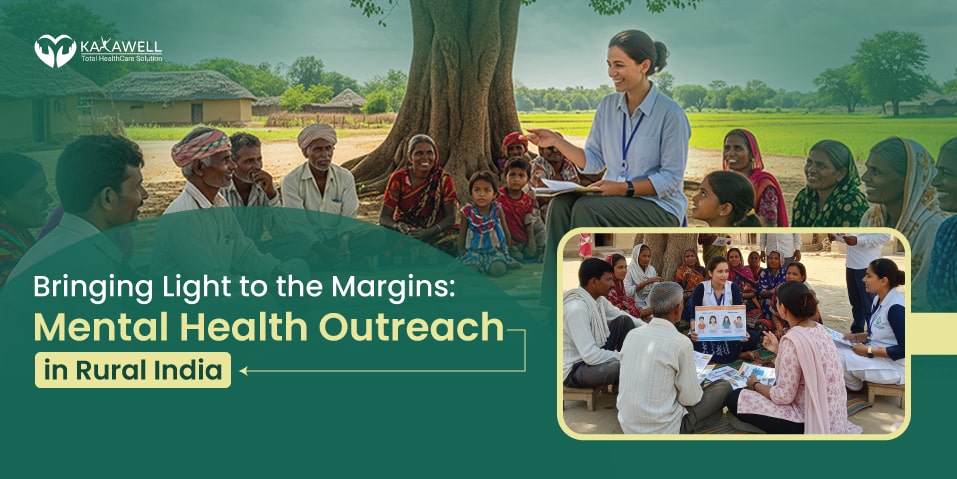
LLL’s approach creates a network of trained community health workers, caregiver support groups, and partnerships with local health facilities and grassroots organisations to ensure help is never too far away. Awareness activities—street plays, group discussions, and recovery storytelling—bring mental health into everyday conversation, replacing fear with understanding.
So far, the program has reached over 21,931 beneficiaries across 15 districts in 8 states of India. It has built caregiver networks, supported livelihoods, and ensured individuals with mental illness consistently have access to treatment and counseling. This integrated approach boosts individual well-being and strengthens community resilience—backed by ongoing mental health research and field insights.
Read More: Does Insurance Cover Mental Health and Trauma Treatment Programs?
Beyond treatment, LLL also focuses on empowerment. The program links mental health initiatives with livelihood opportunities, helping families recover and rebuild financial independence. For example, it introduces skill training and income-generating activities alongside counseling and medication. This dual approach ensures that mental health care becomes a pathway to dignity and stability—helping individuals reclaim agency over their lives while reducing the economic burden of illness on entire households.
The Davangere Success Story: Community-Driven Transformation

Since its launch in 2016, the Community Mental Health Program in Karnataka’s Davangere district—run collaboratively by LLL, the Association for People with Disability (APD), and local stakeholders—has become a model of sustainable, community-led rural mental health.
- Reaching those in need: Over seven years, 2,178 persons with mental illness and 8,172 caregivers have benefited from the program across all six sub-districts of Davangere district.
- Lowering the burden: Where families once spent ₹3,000–4,000 a month on private care, they now access free treatment and medication at primary health centres, reducing costs to nearly zero.
- Community champions: Local “fellows”—including caregivers themselves—lead the program across each taluk, providing advocacy, awareness, and peer support from within the community.
What makes the Davangere model especially powerful is its self-sustainability. After years of guided support, the community now fully runs and maintains the program. Local leaders, health workers, and caregivers have taken ownership, ensuring that access to care, medication, and support continues without external dependence.
Across mental health care in rural areas, change is beginning to take root. Conversations about mental health are replacing silence. Families who once struggled alone now find support from neighbors, local health workers, and community groups.
Read More:- How Fitness Improves Your Physical & Mental Health?
When people receive care, caregivers gain knowledge, and villages choose understanding over stigma, they strengthen a growing network of resilience. Rural mental health transforms not through isolated efforts, but through community-led, sustained action that includes everyone.