KayaWell

CT GUIDED INTERVENTIONS labTest

KayaWell Icon

CT GUIDED INTERVENTIONS labTest

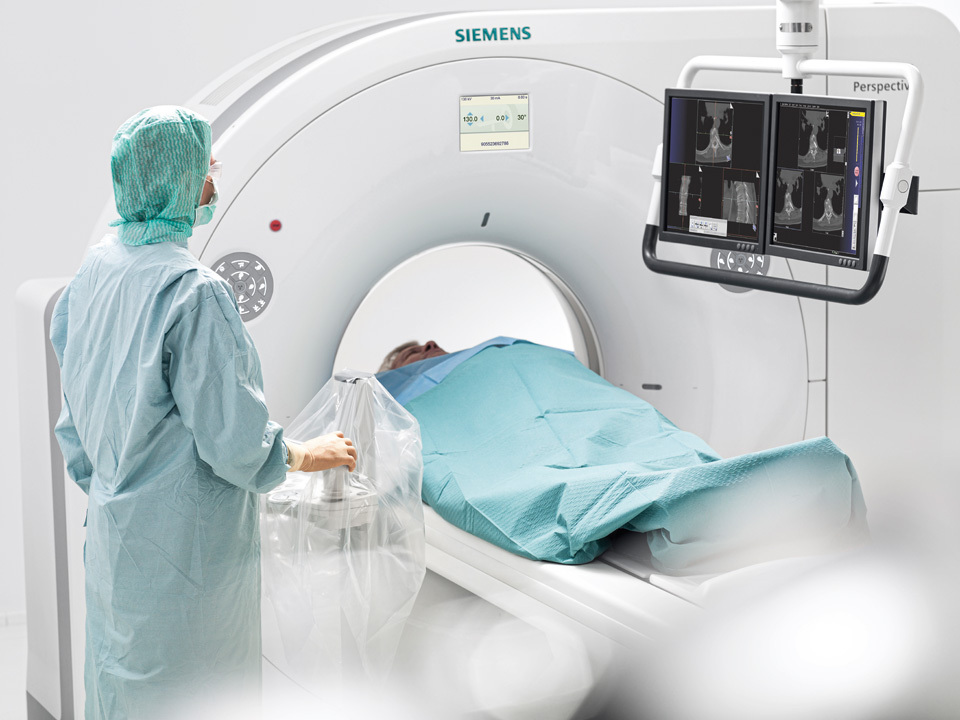
The first reported case of the use of computed tomography (CT) to guide biopsy was published in 1975 (1). By 1976, CT was heralded as the single most accurate method for guiding biopsy (2). With the increasing availability of CT and the development of percutaneous techniques, this statement has proved true: CT is now the imaging modality of choice for guiding percutaneous procedures. Over the following 20 years, CT-guided procedures were performed by obtaining a planning image of the region of interest and using cutaneous markers to specify a percutaneous access point. Needle advancement was documented by leaving the scanning room and obtaining one to three contiguous images at the level of the needle plane and repeating the process with each subsequent manipulation of the needle. The advent of CT fluoroscopy in the early 1990s allowed the needle to be visualized in real time, expediting the procedure and markedly reducing its overall length, partly because participants did not leave the scanning room (3). However, the use of real-time CT fluoroscopy potentially increased patient radiation dose and, for the first time, exposed physicians, nurses, and technologists to radiation.


Because CT fluoroscopy–guided procedures have become more common, they account for an important portion of the radiation dose delivered to our patient population. It has been shown that radiation dose may be significantly reduced in diagnostic CT examinations with no loss of diagnostic image quality (4). Likewise, dose should be taken into account when planning interventional procedures, and the radiation dose used should be as low as reasonably achievable to complete the procedure successfully. In this article, we discuss how patient dose is estimated and how knowledge of how a radiation dose is distributed over the course of a procedure is essential in developing low-dose protocols. If certain straightforward steps are followed, it is possible to significantly reduce radiation exposure for both patients and physicians

http://pubs.rsna.org
CT GUIDED INTERVENTIONS labTest

Comments