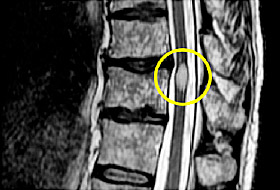


Transverse myelitis is an inflammation of the spinal cord, a major part of the central nervous system. The spinal cord carries nerve signals to and from the brain through nerves that extend from each side of the spinal cord and connect to nerves elsewhere in the body. The term myelitis refers to inflammation of the spinal cord; transverse refers to the pattern of changes in sensation—there is often a band-like sensation across the trunk of the body, with sensory changes below.Causes of transverse myelitis include infections, immune system disorders, and other disorders that may damage or destroy myelin, the fatty white insulating substance that covers nerve cell fibers. Inflammation within the spinal cord interrupts communications between nerve fibers in the spinal cord and the rest of the body, affecting sensation and nerve signaling below the injury. Symptoms include pain, sensory problems, weakness in the legs and possibly the arms, and bladder and bowel problems. The symptoms may develop suddenly (over a period of hours) or over days or weeks.Transverse myelitis can affect people of any age, gender, or race. It does not appear to be genetic or run in families. A peak in incidence rates (the number of new cases per year) appears to occur between 10 and 19 years and 30 and 39 years. It is estimated that about 1,400 new cases of transverse myelitis are diagnosed each year in the United States.Although some people recover from transverse myelitis with minor or no residual problems, the healing process may take months to years. Others may suffer permanent impairments that affect their ability to perform ordinary tasks of daily living. Some individuals will have only one episode of transverse myelitis; other individuals may have a recurrence, especially if an underlying illness caused the disorder.There is no cure for transverse myelitis. Treatments to prevent or minimize permanent neurological deficits include corticosteroid and other medications that suppress the immune system, plasmapheresis (removal of proteins from the blood), or antiviral medications.
Comments